There may be something scary in Halloween trick-or-treat bags, or rather, a lack of something: chocolate.
Cocoa prices dropped from record high numbers in 2024, but retail chocolate prices are still high.
That likely will mean less chocolate for trick-or-treaters, David Branch, sector manager of Wells Fargo Agri-Food Institute, told USA Today.

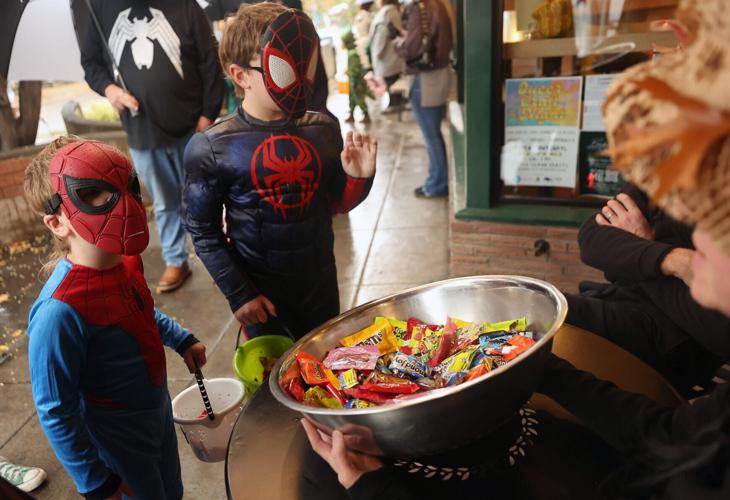
Costumed children participate Oct. 31, 2025, in a Halloween event in Bainbridge Island, Wash.
"For families this Halloween, they may notice they're getting a little less for their money,'' Branch said. "We expect shoppers to lean more heavily on value packs, promotions and alternative treats, while some households may buy fewer chocolate items than in previous years."
The cocoa market is starting to show early signs of stabilizing after record highs in 2024 that mostly stemmed from changes in weather patterns, particularly in Western Africa, Branch said.
People are also reading…
However, ongoing weather risks kept cocoa from returning to its historical trading range, he said.
Adding to that, "the chocolate in Halloween candy on store shelves today was largely made with cocoa that manufacturers purchased six to 12 months ago, when prices were still near record highs," Branch said.

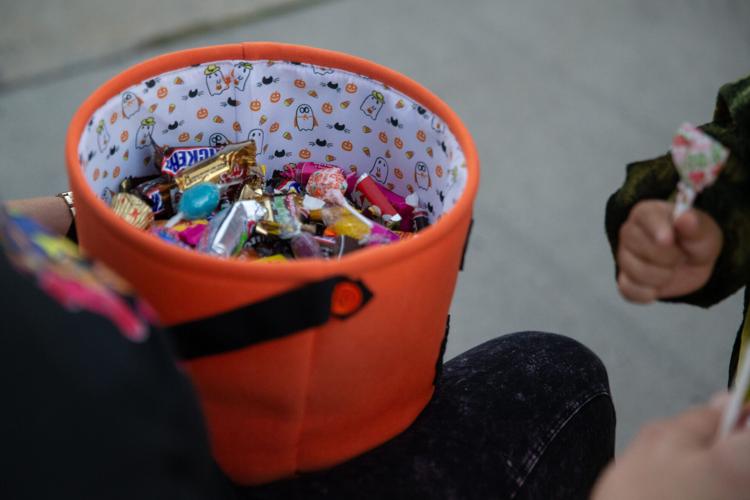
Church member Annette Ballard hands out candy Oct. 31, 2025, at Second Baptist Church's Trunk or Treat in Corpus Christi, Texas.
Still, Halloween is big business. The National Retail Federation estimated that consumers will spend $13.5 billion on Halloween-related activities this year, up from $13.1 billion last year.
"Consumers continue to make Halloween a spending priority, but they are also approaching the season with affordability in mind," NRF Vice President of Industry and Consumer Insights Allison Zeller said in a news release.
Participation in Halloween has held steady since its increased popularity during the COVID-19 pandemic and is higher than pre-pandemic levels of 68% in 2019. Seventy-four percent of consumers surveyed by the NRF said they planned to celebrate Halloween this year, on par with last year's 73%.

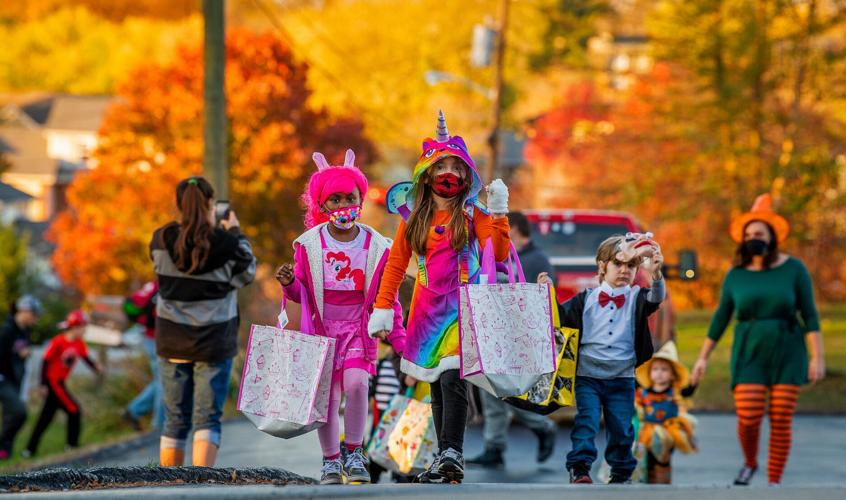
From left, Zion Hart, Lilah Gibson and Parker Stevens head up to Monroe Fire Protection District鈥檚 Station 22 in 2020 to get candy and treats from the firefighters amid COVID-19 virus precautions.
Consumers said they expected to spend an average of $115.14 per person, similar to the $114.45 per person last year. But they are mindful of costs and are planning ahead. Nearly one third, or 31%, said they will comparison shop and 26% said they'd look for coupons or sales for Halloween purchases.
A survey by professional services company PwC found similar results: 86% of consumers surveyed said they planned to celebrate Halloween this year, up from 78% last year. That number rose to 94% among Generation Z respondents.
Spending will average $263 a person, down from $289 in 2025, though the average budget rises to $368 among millennials, that survey found.
"Old traditions are meeting new ways of celebrating," Ali Furman, PwC consumer markets industry leader, told USA Today. Eighty-seven percent of respondents said they still planned to shop in stores for Halloween, but 43% of Gen Z shoppers said social media shapes their Halloween plans and nearly half of artificial intelligence users said they were turning to the technology for costume ideas.
Candy can still fit into a healthy, balanced lifestyle for someone living with diabetes, experts say.
Health-conscious decisions also are making a mark on Halloween. Thirty-four percent of respondents said they would limit or moderate candy or treat intake due to weight, blood sugar or metabolic health goals. Twenty-nine percent said they would reduce alcohol consumption at Halloween events and 25% said they would choose lower-sugar, allergen-friendly or "better for you" treats to hand out to trick-or-treaters.
"Higher prices and health goals may mean smaller candy hauls," Furman said.
However, it may come down to whether there's a trick or a treat in the candy dish: three quarters of Halloween celebrants in the PwC study said they'd still choose chocolate as their go-to treat, compared to 46% of revelers passing out gummy candy.