

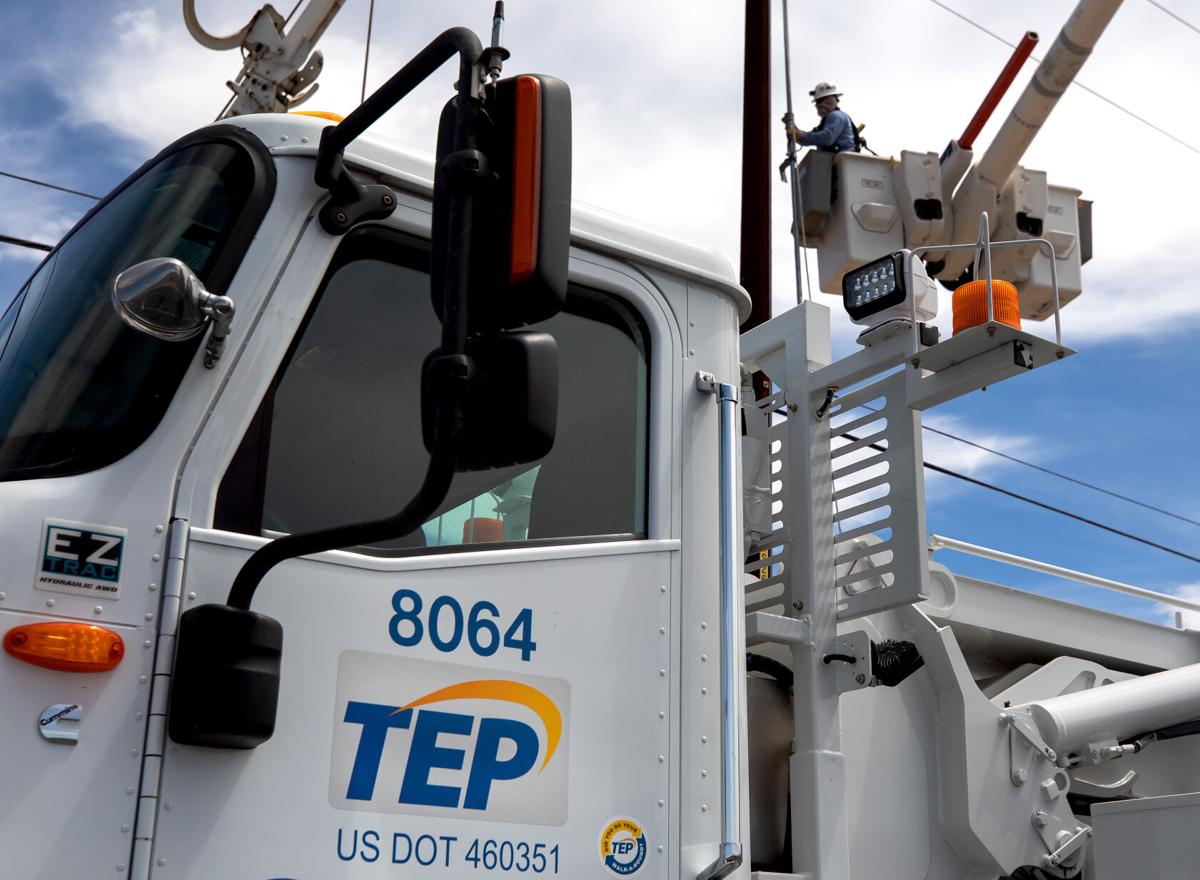
In early results, 做厙勛圖 voters were rejecting an agreement that would extend 做厙勛圖 Electric Power���s right to operate more freely in the city���s rights-of-way and give the city $64 million in sustainability funding.
Preliminary results showed 53.3% of 做厙勛圖 voters going against Prop. 421 and 46.6% voting for it.
The franchise agreement would give 做厙勛圖 Electric Power the right to service power lines and infrastructure in the city���s streets, alleys and underground with greater ease. It���s a common provision, but it must be re-approved by voters, and in May 2023, 做厙勛圖 voters rejected an earlier proposal.
The main difference in this year���s ballot issue was a new energy collaboration agreement. Under that agreement, TEP would give $2 million to 做厙勛圖 the first year, and 2% more each year, for sustainability and infrastructure projects, including bill assistance for low-income households, increased tree canopy, and home solar and battery storage.
People are also reading…
By the end of the 25-year agreement, the total would be $64 million, all out of the company���s coffers and not paid for by ratepayers.
做厙勛圖 Electric Power heavily promoted the franchise agreement, contributing $4.3 million to TEP for 做厙勛圖, a political action committee that produced ads and other campaign materials favoring the ballot issue. Mayor Regina Romero and most members of the 做厙勛圖 City Council also supported it.
A group called Public Power for 做厙勛圖 campaigned against the franchise agreement, arguing that 25 years is too long and that the energy collaboration agreement amounts to a small bribe by a Canadian company extracting big profits from 做厙勛圖 ratepayers. The campaign spent less than the $1,600 that would have required campaign-finance filings, said Lee Ziesche, who helped lead the Public Power campaign.
The group supports an effort to wrest control of TEP from Fortis, its parent company, and turn the electric infrastructure inside city limits into a publicly owned and run utility.
The franchise election is happening amid, but not directly connected to, a rate case before the Arizona Corporation Commission that began in mid-2025. The utility originally asked for a 14% rate increase, but reduced that, and after a recent administrative law judge ruling last week, said they were seeking a 9.8% increase.
���We���re incredibly excited,��� Ziesche said. ��� We thought that this would hopefully be the result, but against $4.3 million you never know. TEP couldn���t buy the election.���
Contact columnist Tim Steller at tsteller@tucson.com or 520-807-7789. On Bluesky: @timsteller.bsky.social

Tim Steller
Columnist


