Arizona Attorney General Kris Mayes is asking a federal judge to block the U.S. government from converting a warehouse in the Phoenix-area city of Surprise to house up to 1,500 people detained on immigration violations, saying the plan is inappropriate and illegal.
In a lawsuit filed Friday, Mayes said the U.S. Department of Homeland Security and Immigration and Customs Enforcement spent about $70 million to buy the vacant 418,400-square-foot industrial warehouse in January as part of a rush to expand detention facilities nationwide. She said the agencies already issued more than $300 million in contracts to oversee extensive construction and renovation at the warehouse site.

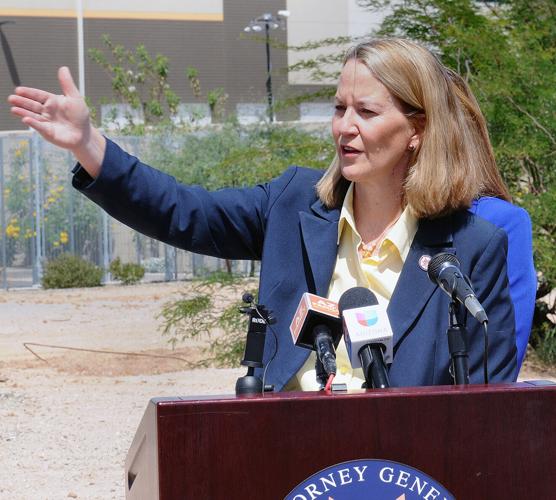
Attorney General Kris Mayes explains Friday why she is trying to stop federal officials from converting a warehouse in Surprise to an immigration detention facility.
Surprise city officials have said there is nothing they can do to stop a federally owned project.Â
Mayes, at a news conference Friday in front of the warehouse, said both U.S. agencies are required to comply with various federal laws but have not.
People are also reading…
"We are asking the federal government to do something that should not be controversial: follow the law,'' said Mayes, a Democratic elected official.Â
One of those laws is the Immigration and Naturalization Act, which Mayes said requires federal agencies to arrange for "appropriate'' places for immigration detention.
"The Surprise warehouse is not (and will never be) suitable for use as a mass detention facility,'' the attorney general said in the lawsuit. She said a building designed as a warehouse can't provide the necessary water and sewage facilities.
Mayes said any federal project of this scope also has to comply with the National Environmental Policy Act.
"Clearly it would affect the environment, given all of the traffic patterns, given the number of people that are going to come in here,'' she said of the ICE detention site. Mayes said that requires the agencies, at the very least, to conduct an environmental assessment, if not compile an environmental impact statement, or show where the project is exempt from the law.
None of that occurred here.
The environmental impact is not just about the impact of the facility itself. The warehouse sits across the street from a hazardous materials storage warehouse where chemical leaks or explosions are possible, she said.
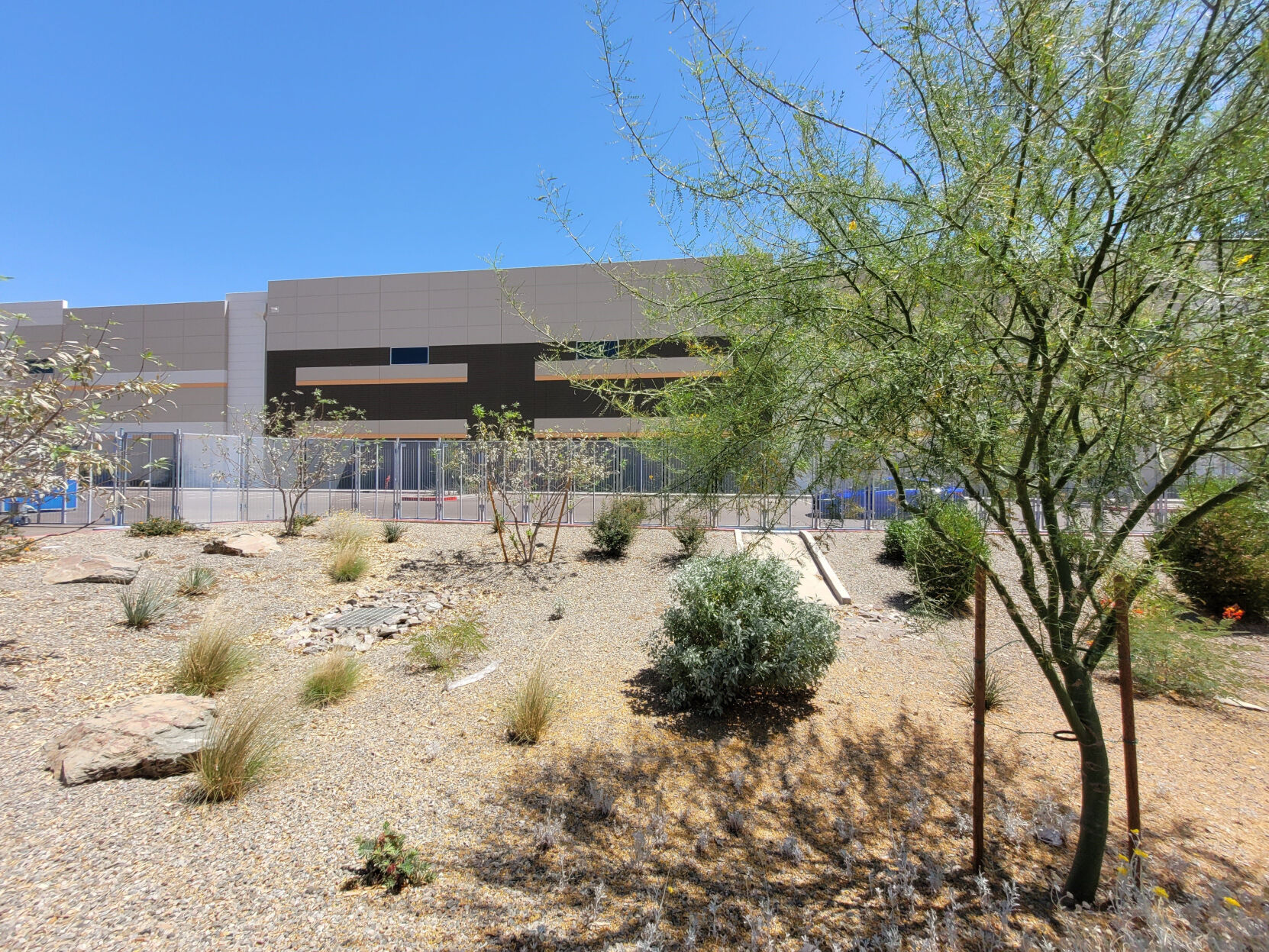
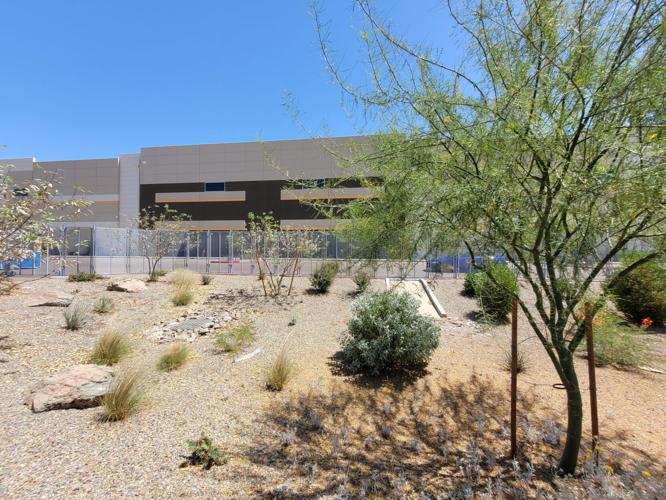
A fence wraps around the warehouse ICE owns in Surprise. On Friday the state of Arizona filed a lawsuit against the federal government to block the building from being converted for immigration detention use.Â
Mayes conceded there already are nearby homes where residents also would be affected by such an occurrence.
"But the major distinction is the sheer number of people who will be housed in this facility and can't get out,'' she said. "If this thing blows up, they will be locked in that facility with no way of getting out.''
That situation creates additional pressures on local fire departments and emergency responders, Mayes said.
She also said the warehouse, if allowed to be used to house ICE detainees, will use so much water that it could leave firefighters without enough to battle an explosion or blaze at the chemical facility, where there are tanks coming and going.
"It's that potential for a perfect storm where you have lowered water supply because the facility is using way more water than it was permitted and designed for, plus the sheer number of people who will be in it, that makes it different," Mayes said. Â
The lawsuit drew a sharp response from a representative from ICE in a written statement, whose name was not provided.
"Let's be honest about what is happening,'' the statement says. "This isn't about the environment. It's about trying to stop President Trump from making America safe.''
The ICE representative dismissed the need for formal environmental studies. "Prior to purchasing this site, ICE carefully evaluated the use of existing facilities to help minimize environmental impacts,'' the statement says.
One potential legal hurdle for Mayes is that federal law does create some "categorical exclusions'' to NEPA and its requirements for steps such as lengthy environmental assessments.
Homeland Security already used that law to get around legal efforts to stop it from building new sections of the border wall. It also has claimed exclusions apply to actions such as acquiring or remodeling an existing building, versus entirely new construction projects.
But Arizona Assistant Attorney General Josh Bendor said he doesn't think that will fly in cases like this.
He pointed out that the agency tried to claim it did not need to conduct such studies for its plans to convert a similar warehouse into a detention facility for 1,500 in Maryland. In that case, U.S. District Court Judge Brendan Huron issued a preliminary injunction, ruling that the federal agencies "do not appear to have taken a 'hard look' at the potential environmental consequences of their plans.''
U.S. District Court Judge Susan Brnovich has not yet set a hearing on Arizona's efforts to stop the warehouse conversion here.
None of the legal arguments against the Surprise facility apply to other ongoing efforts by ICE to find new places to house detainees, Mayes' office said. Those include plans to convert a former private prison in Marana, which had housed state inmates.
There, according to an aide to Mayes, the buildings already were designed to be used to lock people up, meaning there will be no major work that would trigger the need for environmental reviews.
Legal issues about the Surprise facility aside, Cali Overs, vice president of the student body at Dysart High School, said there are separate concerns about dropping a detention facility nearby — and along a path that students walk and bicycle to school.
"It is reckless, irresponsible, and chaotic as it is dangerous,'' Overs said, speaking at Mayes' news conference. She said there will be additional traffic from buses carrying detainees, as well as from media attention and protesters.
And she said there's another concern at her school, which she said is 60% Hispanic.
"Students are worried about getting stopped on their way to school just because they're Hispanic,'' Overs said. Many students, not wanting to take that risk, are switching to online classes, she said.
"These are American citizens changing the course of their education because they no longer feel safe going to school anymore,'' Overs said.
Mayes, in detailing the lawsuit Friday in front of the proposed facility, made it clear her objections to a new ICE facility — regardless of where it is located — also go beyond what the laws she cited require.
She said people already in detention are being mistreated and even dying unnecessarily.
One example, she said, is Emmanuel Damas of Haiti, who died in ICE custody earlier this year at a facility in Florence after federal agents ignored his complaint about a toothache and instead simply gave him ibuprofen. In another case, Arbella Rodriguez Marquez, being treated for leukemia, has not received necessary medication, she said.
"A report by DHS's own Office of Inspector General detailed a pattern of abuse of detainees by ICE staff,'' Mayes said, adding that detainees who complained about conditions were segregated from others and denied access to clean bedding and clothing, as well as to legal materials.Â
Howard Fischer is a veteran journalist who has been reporting since 1970 and covering state politics and the Legislature since 1982. Follow him on X,  and Threads at @azcapmedia or email azcapmedia@gmail.com.