WASHINGTON ��� President Donald Trump canceled a trip by two U.S. envoys to Iran war mediator Pakistan on Saturday, a new setback to peace prospects after Iran's foreign minister��spoke only to Pakistani officials and departed Islamabad.
While peace talks failed to materialize Saturday, Israeli Prime Minister Benjamin Netanyahu ordered his troops to "forcefully" attack Hezbollah targets in Lebanon, his office said, further testing a three-week ceasefire there.

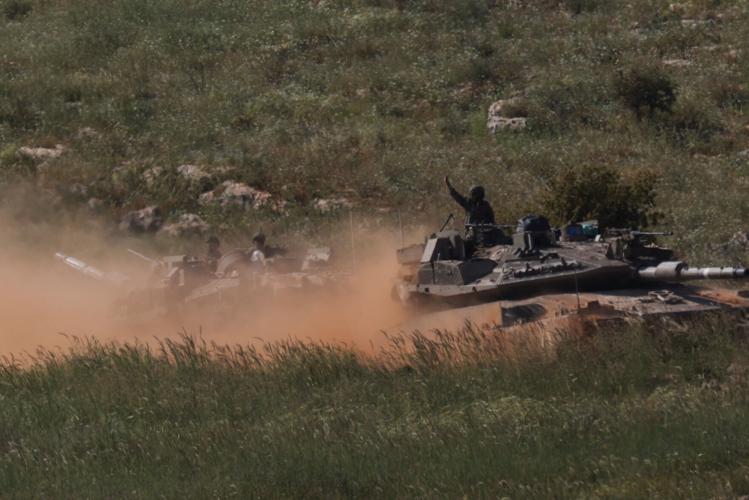
Israeli tanks drive Saturday in Lebanon, seen from the Israeli side of the Israel-Lebanon border.
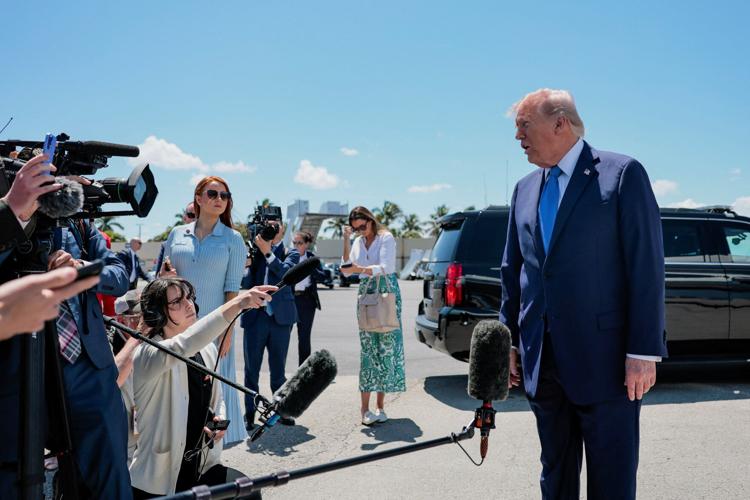
Trump told reporters in Florida that he decided to call off the planned visit by U.S. envoys Steve Witkoff and son-in-law Jared Kushner because the talks in Islamabad involved too much travel and expense.
Before boarding Air Force One on Saturday for a return flight to Washington, Trump said Iran improved an offer to resolve the conflict after he canceled the visit, "but not enough."
People are also reading…
In a social media post, Trump also wrote there was "tremendous infighting and confusion" within Iran's leadership.
"Nobody knows who is in charge, including them. Also, we have all the cards, they have none! If they want to talk, all they have to do is call!!!" he posted on social media.

U.S. President Donald Trump speaks to the news media Saturday before departing Palm Beach International Airport in West Palm Beach, Florida.
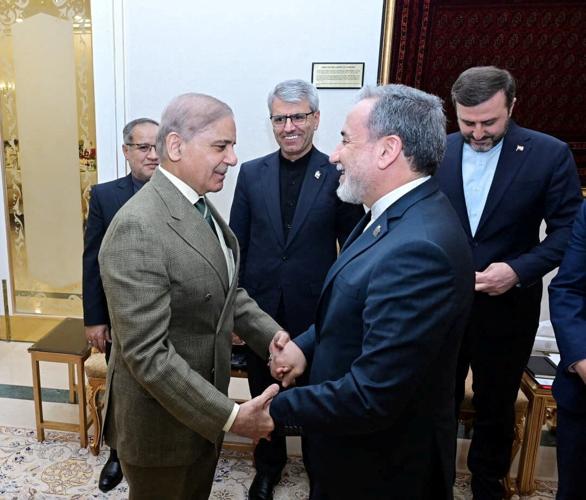
Iranian Foreign Minister Abbas Araghchi earlier left the Pakistani capital without any sign of a breakthrough in talks with Pakistani Prime Minister Shehbaz Sharif and other senior officials.��
Araghchi��is expected to visit Pakistan again after completing his trip to Oman, before traveling to Russia, Iran's Mehr news agency reported.
Though Araghchi described his visit to Pakistan as "very fruitful," he added in a social media post that he "shared Iran's position concerning (a) workable framework to permanently end the war on Iran. Have yet to see if the U.S. is truly serious about diplomacy."
Later, Iranian President Masoud Pezeshkian told Sharif in a phone call that Tehran would not enter "imposed negotiations" under threats or blockade, according to a statement from the Iranian government.
Pezeshkian said the U.S. should first remove "operational obstacles," including its blockade on Iranian ports, to be able to create a groundwork to resolve issues.

Pakistan's Prime Minister Shehbaz Sharif meets with Iranian Foreign Minister Abbas Araghchi on Saturday in Islamabad, Pakistan.
Iran, US at an impasse
Washington and Tehran are at an impasse as Iran largely closed the Strait of Hormuz, which normally carries one-fifth of global oil and liquefied natural gas shipments, while the U.S. blocks Iran's oil exports.
The conflict, in which a ceasefire is in force, began��Feb. 28��with U.S.-Israeli airstrikes on Iran. Iran since carried out strikes against Israel, U.S. bases and Gulf states, and the war pushed up energy prices to multiyear highs, stoking inflation and darkening global growth prospects.
Araghchi��"explained our country's principled positions regarding the latest developments related to the ceasefire and the complete end of the imposed war against Iran," said a statement on the minister's official account on the��Telegram app.

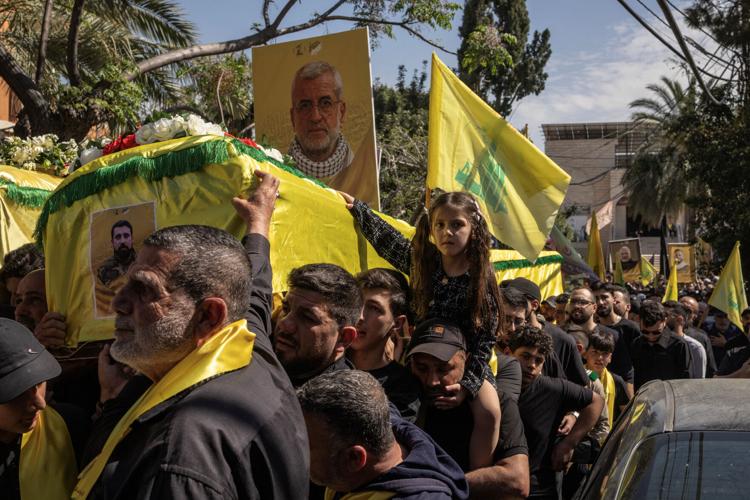
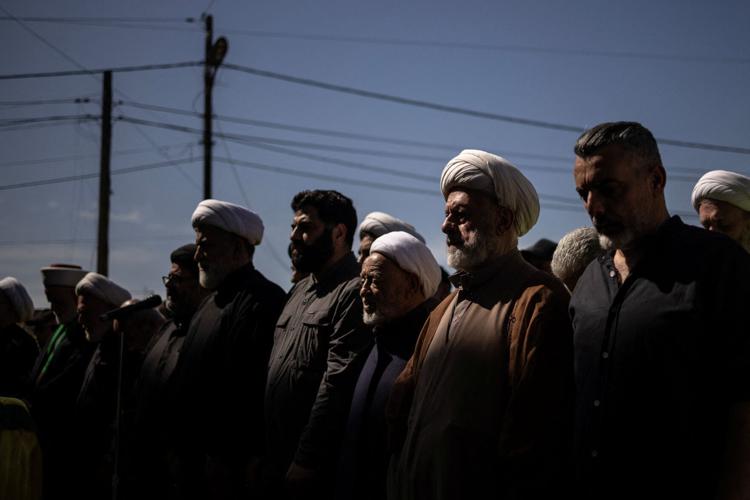
Mourners carry the coffins of three Hezbollah fighters during their funeral ceremony Saturday��in the village of Al-Halloussiyah, Lebanon, amid a temporary ceasefire��between Lebanon and Israel.
Asked about Tehran's reservations over U.S. positions in the talks, an Iranian diplomatic source in Islamabad told Reuters: "Principally, Iranian side will not accept maximalist demands."
White House press secretary Karoline Leavitt previously said the U.S. saw some progress from the Iranian side in recent days and hoped more would come over the weekend, and Vice President JD Vance was ready to travel to Pakistan as well.
Vance led a first round of unsuccessful talks with Iran in Islamabad this month.
Donald Trump has discussed controlling Iran���s highly enriched uranium, calling it ���nuclear dust.���
Ceasefires in place; few ships transit Hormuz
Four days after Trump extended the ceasefire to reconvene negotiators, international flights resumed Saturday from Tehran's Imam Khomeini International Airport, Iranian media said. The first passengers departed for Medina, in Saudi Arabia, Muscat and Istanbul, with operations expected to accelerate in coming days.
"Well, it's a good feeling. When flights resume, trade is done, and people can do their jobs. It���s a good feeling," said one passenger at the airport, where passengers lined up at check-in desks.
Iranian airspace largely was closed since the start of the war. Tens of thousands of flights were canceled, rerouted and rescheduled worldwide, shutting much of ���the Middle East's airspace because of missile and drone threats.
Oil prices surged this past week, with Brent crude futures soaring 16%, on uncertainty over the fate of the peace talks.

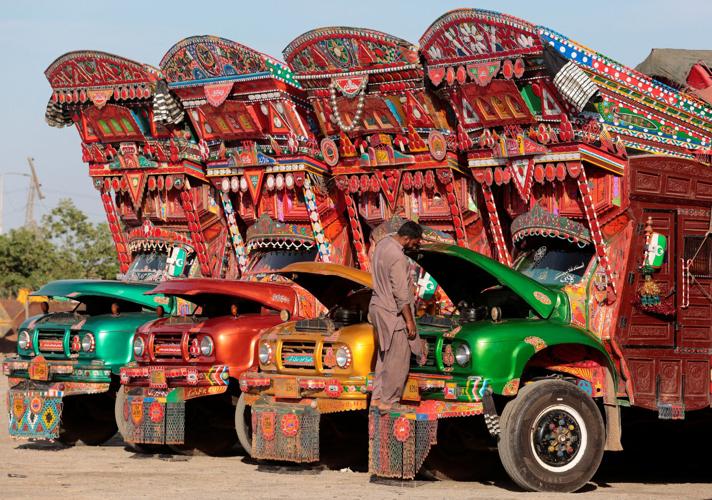
A supply truck driver closes the hood of his parked truck in a yard Saturday��in Islamabad after the suspension of transport and closure of markets on security restrictions, as Pakistan prepared to host the U.S. for the second phase of Iran��peace talks.
Shipping data on Friday showed five ships transited the Strait of Hormuz in 24 hours, compared to about 130 a day before the war. The ships included an Iranian oil-products tanker but none of the vast crude-carrying supertankers that normally feed global energy markets.
Data analytics firm Vortexa said this past week it recorded 35 total transits through the U.S. blockade from April 13 to 22, involving Iran-linked or sanctioned vessels for inbound and outbound journeys.
"The enemy, whose objective of crippling Iran���s missile and military capabilities has failed, is now seeking an honorable exit from the quagmire of war," Iranian media quoted a defense ministry spokesperson as saying. "Iran is today in firm control of the Strait of Hormuz.���
Iranian state TV quoted the country's top military command as reiterating that Iran would react if U.S. forces continued their "blockade and piracy" in the region.

Mourners attend a funeral ceremony of three Hezbollah fighters Saturday��in Al-Halloussiyah, Lebanon, amid a temporary ceasefire between Lebanon and Israel.
On Thursday, Israel and Lebanon extended their ceasefire for three weeks at a White House meeting brokered by Trump, but there was little sign of an end to the fighting in southern Lebanon.
Israel invaded its northern neighbor last month to root out Iran's Hezbollah allies after the militant group fired across the border in support of Iran. Tehran says a ceasefire there is a precondition for talks.
Four people were killed in Israeli strikes on southern Lebanon on Saturday, Lebanon's state news agency reported, and Hezbollah fired rockets at Israel, the Israeli military said.