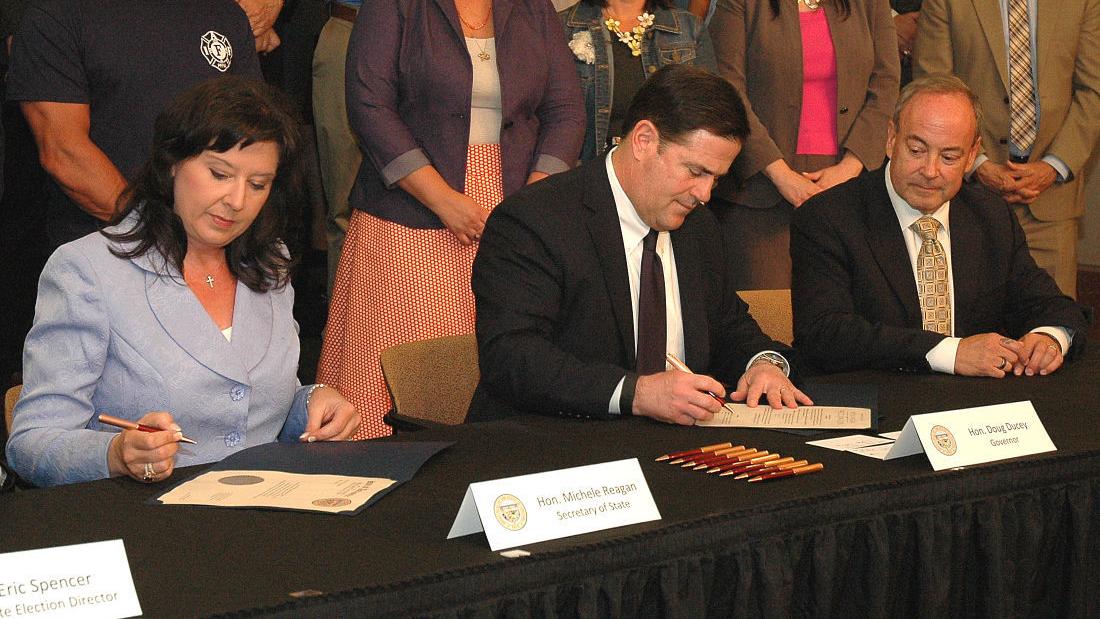
Despite winning a promise from Gov. Doug Ducey to increase teacher pay by 19 percent over the next three years, Arizona Educators United isn���t letting up the pressure.
UPDATE:泭
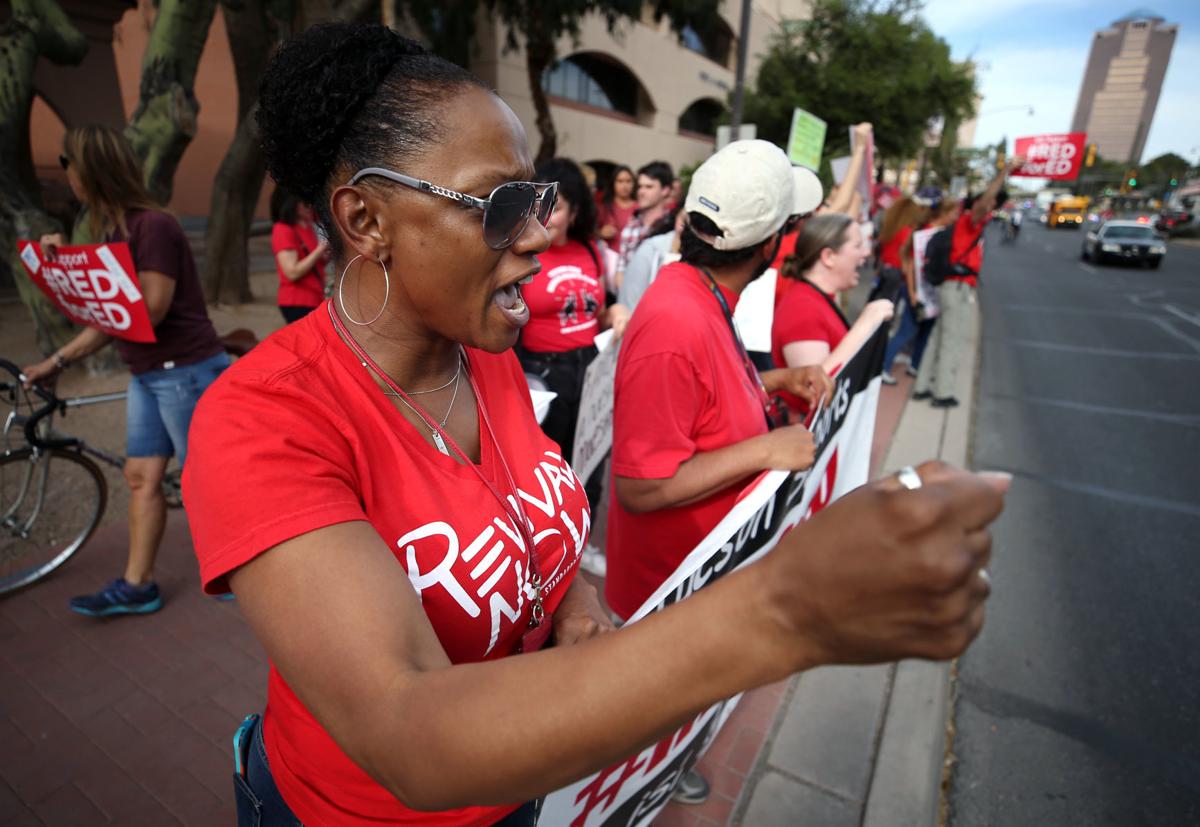
The grass-roots group ��� which in the past month has galvanized tens of thousands of teachers, staff workers and parents from around the state to organize unprecedented marches, protests and social-media campaigns demanding raises and more education funding from state leaders ��� is planning more #RedForEd demonstrations next week.
Derek Harris, a lead organizer with the group and a teacher at 做厙勛圖 Unified School District���s Dietz K-8 School, said Ducey���s offer was a partial step in the right direction, but a strike is still possible if the governor doesn���t invite the group to the negotiating table and do more to solve Arizona���s education-funding crisis.
People are also reading…
Much of the conversation around Arizona Educators United has centered on their quest to increase teacher pay by 20 percent. But that was never the group���s end goal.
Its list of demands includes increasing the pay of all school staff workers, many of whom are making minimum wage driving school buses or working with children with special needs; returning school funding to pre-recession levels; and putting a hiatus on tax cuts until per-pupil spending reaches the national average.
���It���s called Arizona Educators United, not Arizona Teachers United,��� Harris said.
But by continuing the threat to strike even in the face of Ducey���s promise to sharply increase teacher pay, the organizers run the risk of losing public support. Even within the teaching ranks, there is division on how to proceed.
On the group���s Facebook page, teachers��� reactions to Ducey���s announcement were mixed.
Christopher Jerome, a 12th-grade economics teacher at Youngker High School in Buckeye, describes himself as an independent who leans conservative with a libertarian bent. The key to the #RedForEd movement���s success has been that it had a broad base of support from people like him, he said, rather than just dyed-in-the-wool Democrats and union members.
Before the #RedForEd movement took off, Jerome said, ���striking wasn���t even in my vocabulary.���
As of last week, he was prepared to strike ��� and even thought a strike was inevitable. But after hearing Ducey���s budget proposal, he thinks striking would blow up in teachers��� faces, and would turn the public against them.
Jerome said he doesn���t think Ducey���s promise of a 19 percent raise will solve Arizona���s educational woes, but Ducey���s press conference was ���political genius��� that will have to be matched by equally savvy politicking by educators.
���We���ll still try to educate the public about what we need ��� that it���s not over, it���s definitely not over. (We should say,) ���This is a great first step. Good job. Thanks, Ducey.��� But as far as I���m concerned, a strike is off the table. Ducey took that right out of our hands. And I���m OK with that. I didn���t want to strike,��� he said.
Instead, Jerome said the movement should pivot to focusing on a ballot initiative to increase education funding, building on the momentum and trust they���ve already got with the public to initiate long-term funding increases for Arizona���s education system.
Harris said Arizona Educators United isn���t necessarily opposed to that idea, but that���s not their focus right now.
Instead, they need to update their messaging to explain what exactly the governor���s proposal entails, and why it���s not going to solve Arizona���s education-funding problems.
Harris said they���ll do that ���the same way you���d explain to a parent who���s got a kid who went from a C to a B, and the parent comes in and says, ���Man, that���s amazing my kid���s so great.��� You���d say, ���Yeah, but I see the potential here. I see what we can really do.��� So our struggle isn���t over. We don���t put down our signs just because we made the first milestone.���
It also means focusing their messaging on the plight of support staff workers, like Taunya Johnston, a Marana High School aide who works with children with emotional disabilities.
After 16 years on the job, five of them in Marana Unified School District, Johnston still earns $10.50 per hour, the minimum wage. She worked as a school librarian in California and earned $16 per hour. When she moved to Arizona, she started at $9, and only got a raise because of Prop. 206, the 2016 minimum wage hike.
���My students work in fast food, they���re like sophomores and they���re making the same amount as me,��� she said.
Last year, the district cut Johnston���s hours down to just 32 per week. She works a second job, where she earns $15 per hour, but it���s still not enough to make ends meet.
���I can���t afford to live by myself. I���m always worried about my car. I can���t go see my kids. I don���t even live paycheck to paycheck ��� I get by with a little help from my friends,��� Johnston said.
She said she knows she could earn more working just about any other job, but she loves working with kids ��� bringing students who won���t talk to anyone else out of their shells and empowering them to make friends, join clubs and succeed in school.
���It���s like a disease. I love this job. I can���t help it,��� Johnston said.
Ducey���s plan to increase teacher pay wouldn���t apply to Johnston.
And anyway, she said, a 20 percent raise would bring her to roughly $12.50, still not enough to solve her financial problems.
But more importantly to Johnston, the teacher pay increase wouldn���t help solve the funding crisis she sees inside classrooms.
���Teachers aren���t just looking for a pay increase. They���re looking for our students to have the things they need ��� paper, pencils. We buy those things out of our own pockets for our classrooms, and we don���t make enough money to do that,��� she said.
Organizers say those are the points they���ll have to focus on now ��� that teacher pay is one small part of the problem in Arizona���s cash-starved education system.
Their success in getting Ducey to acquiesce to their demands about teacher pay have only empowered Arizona Educators United to keep pushing, Harris said.
For more than a month, Ducey called the group���s demands unreasonable and unaffordable. He denounced the movement as a ���political event��� and its organizers as Democratic ���political operatives.��� He called the group���s actions a ���political circus.���
He stood strong against any attempt to hike teacher pay above the 1 percent he had budgeted.
But as public support for the #RedForEd movement intensified, it was clear the pressure was getting to the governor.
On Tuesday, Ducey chided reporters at a Capitol event who were questioning whether he was willing to budge on his plan to increase teacher pay by 1 percent, complaining that reporting on the teacher-pay crisis in Arizona has been inaccurate. Ducey said there has been a ���9 percent increase in dollars available for teacher pay��� under his tenure, which isn���t the same as a 9 percent raise, since much of that funding went to hiring new teachers to keep up with growing school enrollment populations.
���Make sure that���s part of your story,��� he snapped.
On Wednesday, more than 22,000 people at more than 1,100 schools and 130 school districts participated in historic walk-ins at schools across the state.
On Thursday, Ducey unveiled the outline of his budget proposal at a hastily assembled press conference. He said by utilizing larger-than-expected revenues and by eliminating some of his other budget priorities, he would be able to find the money to provide teachers 19 percent raises over three years.
���I���ve been listening and I���ve been impressed,��� he said.
Throughout, Ducey has steadfastly refused to meet with Arizona Educators United.
And the organization still has questions about how Ducey will pay for teachers��� raises.
Ducey said at his press conference there will be no ���shell game��� and the $274 million needed to boost teacher pay by 9 percent this year won���t come from other education funds.
But organizers say Ducey���s additional teacher-pay funding shouldn���t come at the expense of other vital services, either.
Details are scant and the plan hasn���t actually been put to paper yet. Ducey said his office will be working through the weekend to iron out the details.
Gubernatorial press aide Daniel Scarpinato cited forecasts by economists released last week which predict revenues for this year will be $262 million higher than anticipated, with an additional $300 million from all sources for the coming budget year.
With other expenses, that by itself will not be enough to fund the $274 million first-year cost, much less the more than $670 million price tag when fully implemented. But Scarpinato said an improving economy also means fewer people in the state���s Medicaid program and needing other state services.
Arizona Educators United noted that at this point the plan isn���t even a handshake promise. It���s an election-year promise, and nothing holds Ducey to it after his re-election. They���re still hoping the governor will sit down and negotiate with them on a long-term plan.
Until that happens, Arizona Educators United will keep up the pressure and maintain the option of striking, Harris said.
���Two days ago, he was still calling us names. Now he���s ���impressed��� with us,��� Harris said. ���He���s got to show us he���s reprioritized education, actually doing it, not just doing it for the sake of his re-election.���
Contact reporter Hank Stephenson at hstephenson@tucson.com or 573-4279. On Twitter: @hankdeanlight Reporter Howard Fischer of Capitol Media Services contributed to this story.