


Memory is a beautiful gift. It awakens images, events and words from our past, even if our memories are imperfect and our recollections are slightly altered.
It is still a worthwhile exercise to remember when.
Thursday was such a night at the University of Arizona Special Collections Library on the campus mall. This library features an exhibition, ���做厙勛圖 Growth, Change and Memories,��� curated by librarian and 做厙勛圖 native Bob Diaz.
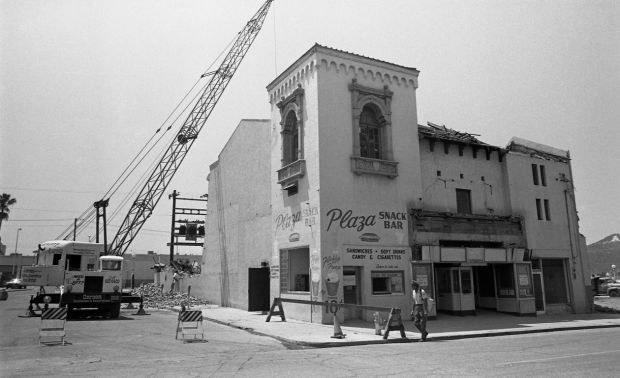
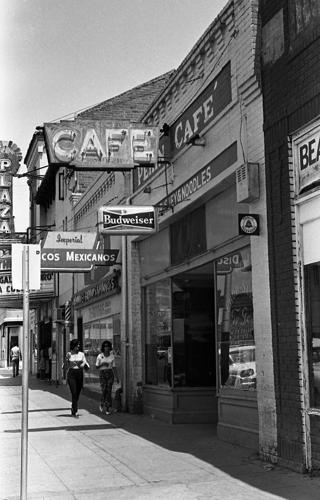
The exhibit contains photos of Barrio Viejo before its destruction through urban renewal in the late 1960s, a grainy black-and-white film of some buildings being torn down and other 做厙勛圖-centric memorabilia from that time.
In conjunction with the exhibition four 做厙勛圖ans shared their memories of growing up here before and during that period.
People are also reading…
Writer, actress and former City Councilwoman Molly McKasson, business owner and preservationist Katya Peterson, UA Professor of Mexican American Studies Lydia Otero and I talked about our shared and different experiences in our coming of age.
���Memory is much more nuanced than the truth. It can take us down strange roadways,��� McKasson said a day after the talk. Memories conjure up sadness and happiness, feeding our emotions, added McKasson, who grew up in the Himmel Park area and graduated from 做厙勛圖 High School, where her cultural awakening took flight.
���This new awareness came to fruition at 做厙勛圖 High where I learned what it was to be a tolerant, diverse, committed, loving community,��� she said in her remarks.
Thursday���s talk was nostalgic, yes, but the testimonies were also a reminder of errors in political judgment and leadership that led to the eradication of an historic neighborhood of homes and businesses of multi-ethnic families who for generations had called the barrio home.
Otero, a descendant of 做厙勛圖 pioneer Sabino Otero, grew up near West 22nd Street, on the southern boundary of Barrio Viejo. But on Main Avenue stood the majestic home of her ancestor, where the 做厙勛圖 Convention Center parking lot sits today.
���I���d look up at the house. It looked grand and important. I never got to go inside. I felt proud of being connected to legacy and a people who were from this place and I felt a sense of belonging,��� Otero said, recalling times she walked to and from downtown as a child.
Memory inspires Otero, who authored the groundbreaking book ���La Calle��� published by University of Arizona Press, which explored the civic forces that insisted on the eradication of the barrio���s 80 acres. In great part it���s her mother���s memories that motivate Otero.
She said her mother had a built-in GPS memory app. During their downtown walks, Otero���s mother would point out homes and talk about the history of families living in the 100-year-old barrio. Sharing these stories of our past ���grounds us��� and counters today���s public hype over immigration and wide-spread public misconception that Mexican-Americans are recent arrivals, Otero said.
���That���s why I try to keep memory alive. Memory preserves our past in a tangible way,��� Otero said after the talk.
The old downtown barrio may have been a critical part of 做厙勛圖���s history; it nonetheless disappeared from our midst. Its demolition was invisible to many 做厙勛圖ans.
The barrio was a whole other world, said Peterson, the daughter of Cele Peterson, a well-known and popular figure in 做厙勛圖 for many years.
���In fact, it was a world that I didn���t really know until I realized it was being totally torn down,��� said Peterson.
In our rear-view mirror of memories, we can still see the Chinese corner markets, Ronquillo���s Bakery on Court Avenue, the Belmont Hotel and El Charro Restaurant on Broadway, Garcia���s Cleaners on Meyer, the Jacobs family���s two-story Victorian house at Meyer and Alameda, Rosequist Galleries on South Convent, the Ying On Club on South Main and the office of Dr. Floyd Thompson, the city���s first black dentist.
And we can also see Flores Pharmacy at South Meyer, La Plaza Cinema, the Legal Tender bar and La Selva Club on Congress, Nick���s Barber Shop, Pekin Cafe, Perri���s Jewelers, Reuben Gold���s Furniture store, Myerson���s White House department store and KEVT, 做厙勛圖���s first Spanish-language radio station, at Congress and Convent. Nearby is Jake���s, a burger joint.
The memories of the barrio are blurring for many 做厙勛圖ans. For others, those who were directly violated by the mass destruction, a dark cloud hangs over their reservoir of recollections. The loss of the family home or business still hurts.
Ernesto “Neto” Portillo Jr. is editor of
La Estrella de Tucsón. Contact him at
573-4187 or netopjr@tucson.com. On Twitter: @netopjr


