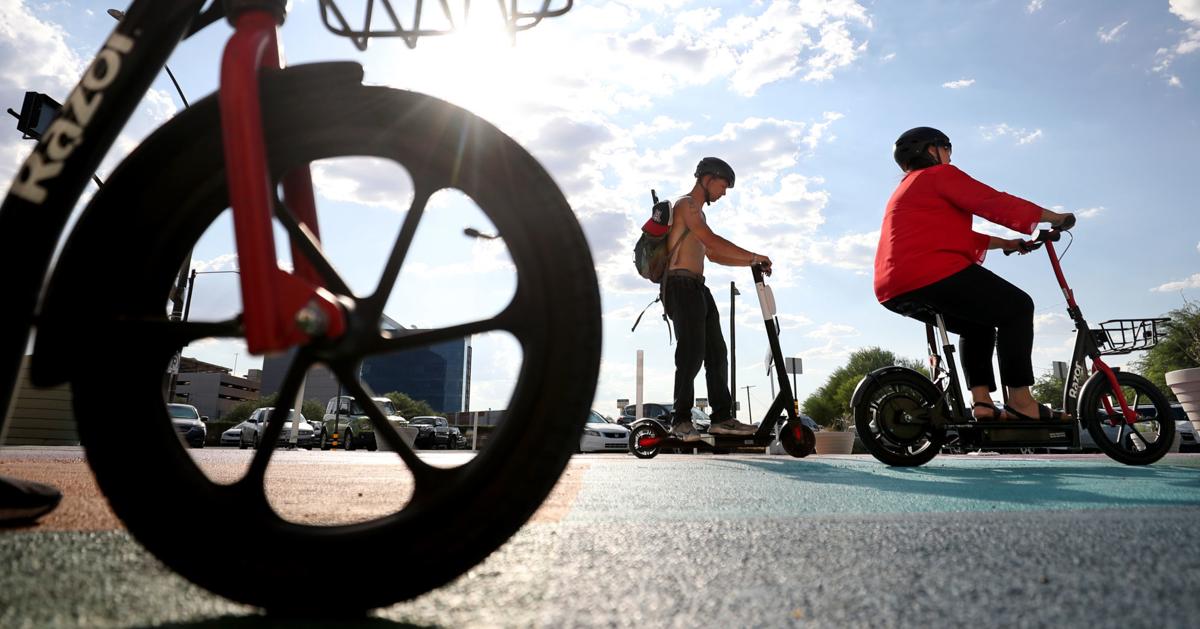
The University of Arizona is turning to GPS to enforce its campus ban on electric scooters in preparation of the city of 做厙勛圖 launching its dockless rental scooter pilot program this week.
Should a rental scooter user wander past the electric campus boundary, the scooters will idle down to a complete stop, while riders will also receive a message on their app that they���re in a ���no-ride zone.���
The exact path of the geo-fence had not yet been finalized, as of Friday morning, but ���generally speaking it encompasses all of UA property,��� said Jim Sayre, the university���s executive director of parking and transportation.
���We���re just asking scooter riders that, as they approach campus, they keep the scooters in the designated areas,��� Sayre said, calling the geo-fence the ���primary way of enforcing��� the ban.
People are also reading…
Andy Bemis, the city���s bicycle and pedestrian program coordinator, said Arizona State University has a similar geo-fence around its campus after on electric scooters.
The scooter rental companies have assured the city that the stopping isn���t abrupt, ensuring the safety of the riders, he said.
���Nobody is thrown over the handlebars on these guys,��� Bemis said. ���I certainly hope not. I know that���s not in anyone���s best interest.���
The UA prohibited electric scooters from campus last October, citing safety concerns due to its large influx of vehicle, pedestrian and bicycle traffic. That decision came months before 做厙勛圖 officially moved forward with a six-month pilot program of rental scooters. Hundreds of the scooters from two companies, Bird and Razor, will hit city streets Thursday.
In the process of preparing for the launch, the city notified the two companies that they would not be allowed to operate in two areas where the electric scooters are banned ��� the UA campus and the Pima County Loop trail ��� and potentially during special events, such as fairs on Fourth Avenue.
In terms of the UA campus, representatives from the school, city and scooter companies worked together to figure out a way to not interfere with the pilot program, but also enforce the campus scooter ban, officials said.
The geo-fence around UA does not include sidewalks adjacent to campus, where electric scooter riding is prohibited. That essentially creates a buffer to account for potential inaccuracies of the GPS.
���Knowing that the GPS is not exact, there���s probably going to be some adjustments that have to be made over time as we learn how the technology works,��� Sayre said.
Along with the geo-fence, several designated parking areas for the scooters were established just off campus. The school has also created fliers with scooter safety information, similar to the ones passed out to bicyclists at the start of the semester, and has partnered with campus health to track any electric scooter injuries, Sayre said.
���We���re trying to be supportive of the city���s pilot program so they can have a successful learning period,��� he said. ���We���ve tried to partner on things like let���s designate parking so at least they can be riding in the city and as they approach campus have a reasonable place to park.���
Bemis acknowledged that idling the scooters does not eliminate the problem of scooters still physically being on campus. It���s on the users to push the scooters back to the legal riding area.
Sayre said they are prepared to impound electric scooters should they get left on campus.
���We have folks and resources dedicated to dealing with those things,��� he said. ���I wouldn���t say it���s necessarily a problem, but it���s a resource we���d have to dedicate to that we���d prefer to dedicate to something else.���
As for the future, Sayre said the school has not ruled out lifting the ban, should the pilot program prove to be a success.
���We aren���t allowing them on campus because we���re concerned for the safety of employees, students and visitors to campus. We���d have to learn how that���s changed,��� he said. ���We���re anxious to learn along with the city.���
Contact reporter Justin Sayers at jsayers1@tucson.com or 573-4192. Twitter: @_JustinSayers. Facebook: JustinSSayers

Justin Sayers
Reporter