

A local coalition is using bicycles as a tool to advocate for safe streets while promoting accessibility, mobility and representation for 做厙勛圖���s south- and west-side communities.
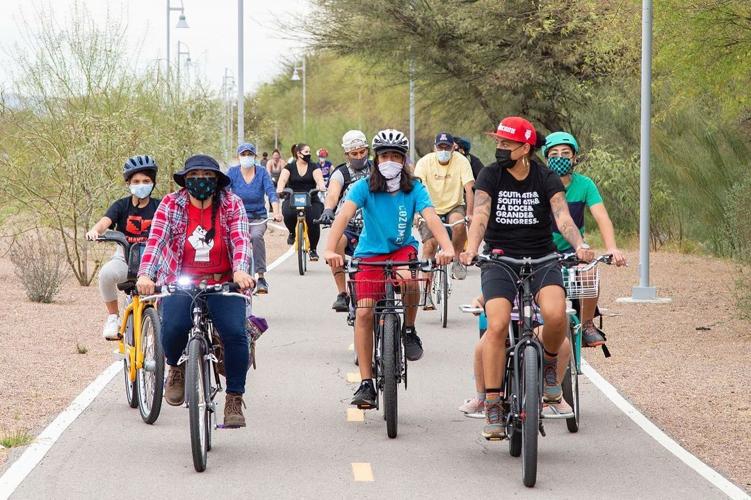
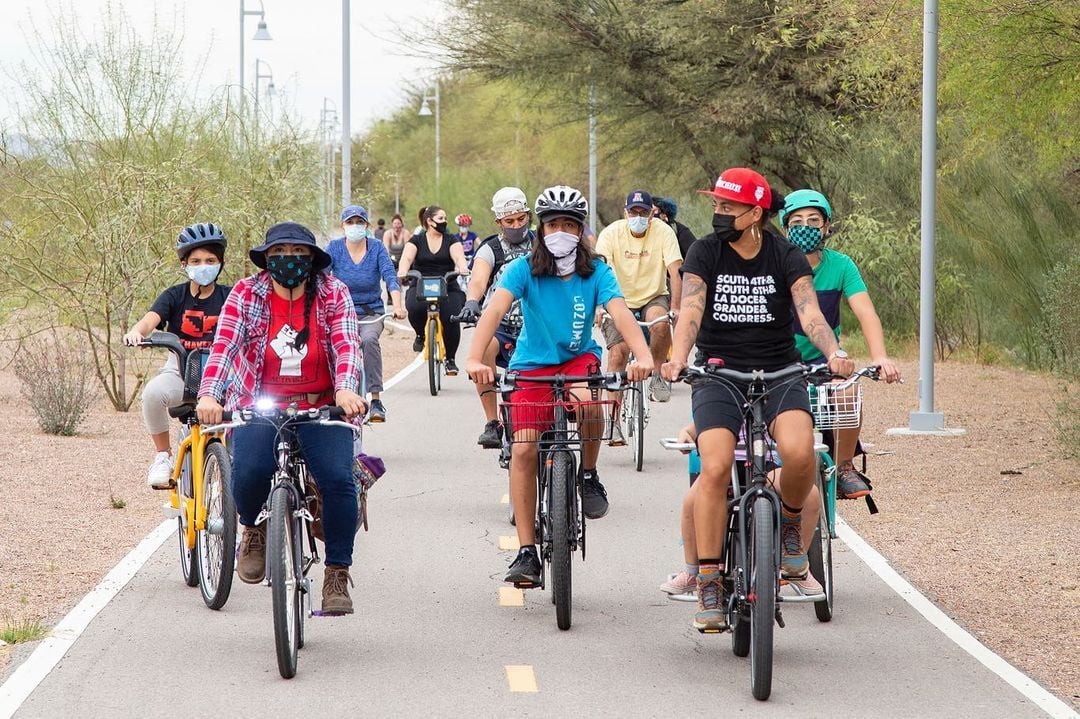
On the last Friday evening and the second Sunday morning of each month, you can find members of , known as FUGA for short, wearing chartreuse-colored reflective safety vests as they roll through the streets of their south- and west-side neighborhoods on bicycles.
The monthly ������ and ������ rides help boost outreach about the accessibility issues��that��these communities face����� from the people who deal with them firsthand.��
FUGA���s outings were inspired by the mass bicycle rides and streets in other areas, like South America and Italy, where cities take a less car-centric approach to their streets and open them up for bikes, scooters and those on foot.
On a local scale, the bike rides allow��riders to see their streets in a new light, which FUGA co-founder Vanessa Gallego called ���empowering for the community.���

Community members join FUGA on the last Friday or second Sunday of every month to ride for safer streets and to promote accessibility and mobility in their communities.
���We started realizing that we needed a coalition of folks that knew how to represent their community, their barrio, their streets, because we���re from them,��� said Gallego. ���So that's how Familias Unidas Ganando Accesibilidad came (to be) from our own folks at the table who were just like, you know, ���We can represent our streets because we know what it is to ride, you know, whether it's a bike or walk, and who else (is there) to speak upon it, right?��� So, with our ties with the community, we figured that we can bring the community to the table.���
Along with FUGA���s Friday and Sunday rides, the grassroots coalition hosts a variety of events benefitting the community and its members, such as a clean-up rally and a ride in honor of Cesar Chavez Day, or a specially-themed Sunday ride called ���Cicletada de las Ni簽as��� that was dedicated to empowering young girls and women, inspired by similar rides in Santiago, Chile.
A pandemic pause
Before the pandemic, FUGA would make pit stops at restaurants like or and other local businesses on and surrounding areas to chat with community members and business owners about the importance of accessibility and mobility (while sharing a good meal, of course).
But once the pandemic fully hit 做厙勛圖, the community rides came to a screeching halt for several months with one exception ��� the ������ for the November 2020 presidential election, where community members��got together for a ride to drop off their voting ballots.
The mass community rides resumed in February 2021 and since then, FUGA hasn���t stopped riding, said Gallego.��
However, the comeback wasn���t easy and it took some time to adjust.
���It was really emotional. But to come back, and be able to ride together, it was a whole different feeling,��� Gallego said. ���Like we're riding for transportation, we're riding because we're survivors, like, we're here. So many folks of our community didn't make it... But it was different riding the streets. It was really different. We came back to streets that hadn't seen bicyclists, you know, in a while, so it was very car-centric. I think the first time we rode all we heard was loud racing and (cars doing) doughnuts. And it was scary to hear that because the car community wasn't accepting of us.���
FUGA had done a lot of work to establish a presence in the south- and west-side communities, Gallego said, but they had to come back and work hard to do it all over again.
���We would get honked at, we would get cars being, like, super aggressive getting close and angry that we're taking up space,��� she said. ���Now that we've been doing it for a while, we definitely get the good honks, the waves, we get folks stopping for us... So we are feeling the love again.���
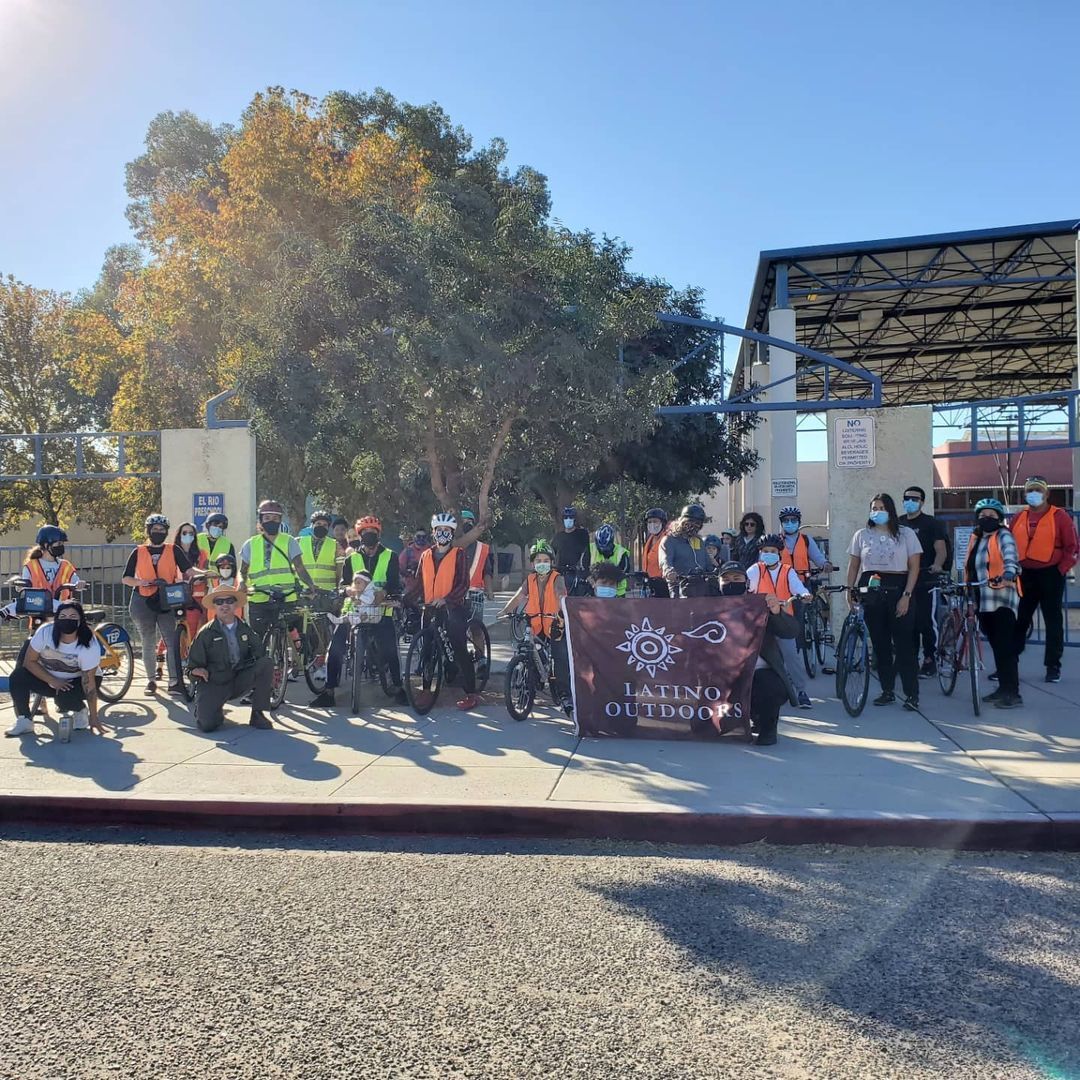
Members of FUGA pose for a photo after completing a 10-mile bike ride last November.
From the living room to 做厙勛圖���s streets
FUGA��was a result of��the grant that 做厙勛圖 received in 2017. The project was an initiative from the foundation to help promote bicycle riding and community engagement in 做厙勛圖.
���The Big Jump was a coalition of folks who weren't in transportation and they weren't bicyclists. But we all intersected with transportation,��� Gallego said. ���So there were folks from housing from the , the , we had bikers there. So there was a representation that was community-based talking about mobility in the streets.���
Following the Big Jump Project, FUGA was officially formed in 2018.
The name, Familias Unidas Ganando Accesibilidad, was created in (now vice mayor) ���s living room, who Gallego says has been a ���Fugista�����since day one.
���I believe it was Claudio (Rodriguez) from the Community Food Bank, one of our members who was just like, ���We need to be something unstoppable,������ Gallego said. ���And it was kind of playing with the name like we were a family. We looked around and there were families, there were babies, there were mothers or fathers, there were non-traditional families there and we just were here united.���
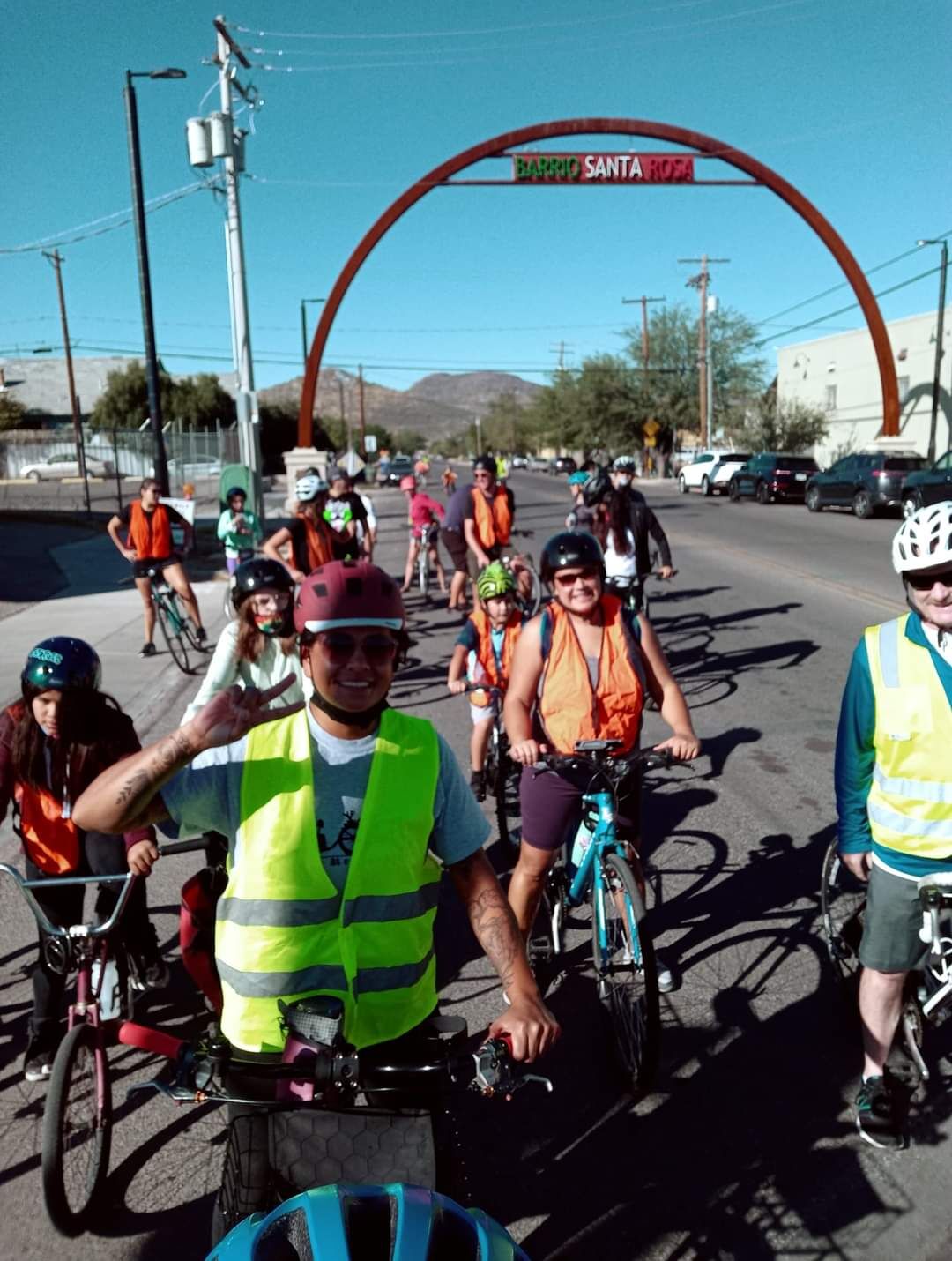
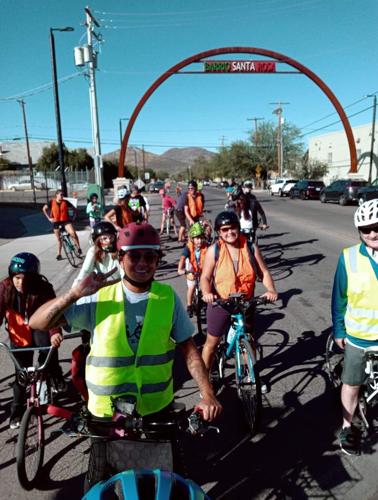
FUGA rides through some of the west-side barrios including Barrio Santa Rosa during their second Sunday bike rides.
Now, FUGA sees an average of 20 riders, ranging from babies to nanas and tatas, joining Gallego and Santa Cruz for their monthly bike rides.
But Gallego said FUGA wouldn���t be possible without the help of people like Santa Cruz and various organizations, including , which provides free bike rentals for the rides and and the for supporting accessibility and mobility.
Other soon-to-be collaborators include , who FUGA will be partnering with to complete mobility and art projects and other community reinvestment events.
Although FUGA isn���t an official��nonprofit organization, they partner��with established nonprofits for financial support through grants.
���We're very grassroots and that's where we come from,��� Gallego said. ���And right now, this is the structure that worked. We knew that we wanted to be a nonprofit because so many of us in the coalition come from nonprofits or come from community service or come from activism. So, you know, we didn't see this as something that was capitalistic. We just saw it as very, very homegrown... As FUGA grows, and definitely our vision in the work we want to do, we recognize that at some point, we'd have to become some kind of legal entity, but not yet.���
���What do you ride for? What are you down for?���
While Gallego and the rest of the Fugistas hope to implement more programs and events in the future that meet at the intersection of transportation and community, they���re most looking forward to continuing to change the perception of riding bikes on the south side.
Some of the stigmas that surround bicycle riders on the south side include DUIs, the inability to afford a car or home insecurity,��according to Gallego. But in order to change the streets, she says, we have to change the perception.
���In the ���90s, we used the terms, ���What do you ride for? Like, ���What are you down for?��� You might be riding with your friend, but what are you really riding for in your community?��� Gallego said. ���So it's also empowering our youth to be like, ���We can make change, we can be seen.��� So a big part of us is also connecting that youth to empowerment. Because a lot of us are, you know, mothers, fathers, older professionals and whatnot. But it's really the youth that's going to carry this movement.���
What Gallego continues to ride for is accessible and environmentally-friendly transportation and mobility for 做厙勛圖. Although her background isn���t in city planning or transportation, that didn���t stop her from speaking up at the virtual 做厙勛圖 Transportation Talks conference about the City of 做厙勛圖���s mobility master plan that would determine the outcome of 做厙勛圖���s transportation infrastructure for the next 20 years.
���It really shapes the future and we knew that we weren't going to be left behind anymore,��� she said of the south- and west-side communities.
The mobility master plan, called , was approved by Mayor Regina Romero on Dec. 7, 2021, and includes over ���230 projects ranging from major corridor and high-capacity transit projects down to smaller-scale neighborhood connections,��� according to the .
While the city will begin the ������ this summer, you can still count on��FUGA to roll��through 做厙勛圖���s south- and west-side neighborhoods, trying to reach more people and find out what they ride for.��
View this post on Instagram
Individuals interested in getting involved with FUGA are encouraged to come out to a ride on their bike, scooter or other form of mobility, or to become a ride leader for the group, according to Gallego, who says that community members are who keep FUGA rolling.
���I like being able to help shape that vision. I know that my voice is going to be heard at the table,��� she said. ���So, it's empowering because it can be me today. It can be somebody else tomorrow. And that's what this organization lends to. Like, you're going to be uplifted and being able to uplift the community is just so powerful.���